
Sofia
A business leader describes clearer thinking and a calmer daily routine.
Read the story →An educational journey through nutrition, biochemistry, human biology and health — written for everyone, not just those living with a diagnosis.
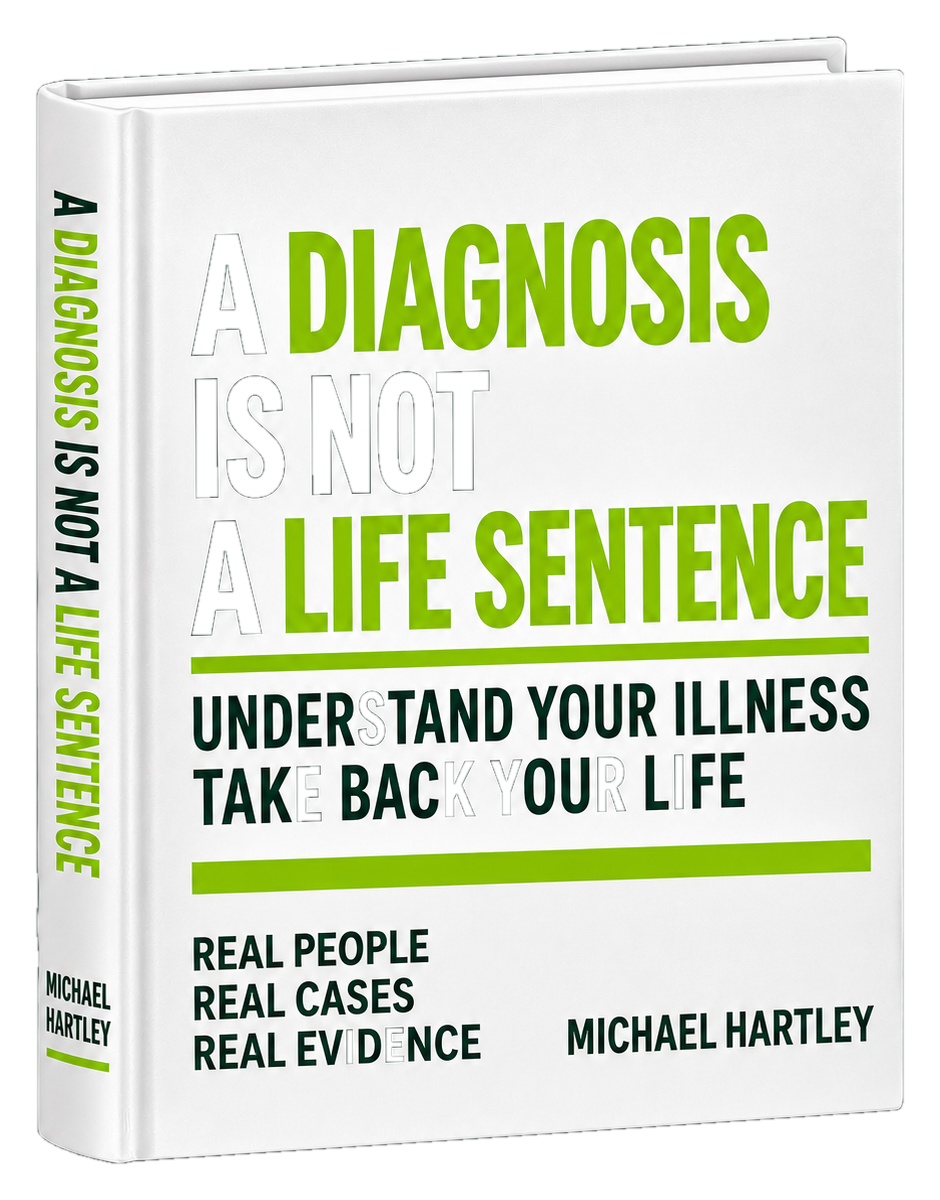
You can own the most beautiful home, drive the finest car, travel the world and achieve extraordinary professional success.
But without your health, how much of it can you truly enjoy?
Your body is the one thing you will carry with you throughout your entire life. Yet most of us spend remarkably little time learning how it actually works. We learn how to manage our finances, build businesses and operate complex technology — but rarely how to understand the extraordinary biological system that keeps us alive.
This book was written to change that. Not just for people living with a diagnosis. But for everyone.
Understanding your body should not require a medical degree.
From nutrition and biochemistry to cellular biology, the immune system, inflammation, hormones, enzymes, the gut microbiome and the brain, this book explores the complex relationships that shape human health.
It explains subjects often buried in scientific literature and medical terminology in accessible language, without sacrificing scientific depth. It is designed to be read as a learning journey and returned to as an educational reference.
Real-life stories bring these subjects into human perspective. Personal experiences and scientific evidence are distinct, and both deserve to be understood in context.
You Cannot Change What You Do Not Understand.
Understand your body. Understand your choices. Understand your possibilities.School teaches us many things. Yet few of us leave school with a practical understanding of how food, chemistry, biology and everyday habits shape our health.
This book brings these subjects together in clear, everyday language. No unnecessary medical jargon. No medical degree required. Just an accessible way to understand the body and the world around it.
Every parent should want their children to understand the body they will live in for the rest of their lives.
Giving young people this knowledge early in life can help them make informed choices and build habits that support their long-term health and reduce the risk of preventable disease.
Few gifts are more valuable than helping a young person understand their own body.
Six individual stories of health challenges, daily life and personal experiences of change.
A business leader describes clearer thinking and a calmer daily routine.
Read the story →A goldsmith describes her experience of returning to her craft after years of pain.
Read the story →A historian reflects on sleep, fatigue and the return of energy.
Read the story →A father describes what it meant to participate in family life again.
Read the story →A previously active father reflects on mobility and daily activities.
Read the story →A runner describes rediscovering the enjoyment of movement.
Read the story →Individual accounts, not clinical evidence of efficacy or predictions of outcomes. Names and certain identifying details have been changed.
Discover the science of health in clear, everyday language. Explore the connections between what you eat, how your body works and the choices you make.
Future books are planned to explore individual subjects in greater depth. The ambition is to make the science behind human health accessible to everyone — one subject at a time.
Begin with six real-life stories. Open a story below to read its introduction and selected excerpt.
The story describes a 39-year-old leader balancing work and family while experiencing persistent restlessness, poor sleep and difficulty concentrating. She reported clearer thinking after a week and later described more energy and focus at work.
“I started thinking more clearly, and I no longer needed to check my phone every five minutes.”
Selected excerpt, translated from the Danish case material.
After two road accidents, Sophie could work for only 30–60 minutes at a time. Her account describes changes in sleep, energy and the ability to work for several hours again.
“I felt like a shadow. As if I was here — but not really.”
Selected excerpt, translated from the Danish case material.
Michael, 55, described years of fatigue, headaches and poor sleep. In his account, he noticed changes in sleep and energy during a 43-day period.
“Now I feel mentally and physically lighter.”
Selected excerpt, translated from the Danish case material.
David’s story describes a long history of illness, physical limitations and depression. He reported changes in everyday functioning and renewed participation in family life.
“I play with my children again.”
Selected excerpt, translated from the Danish case material.
Mark describes how joint pain had limited sport and play with his son, and reports that he later resumed physical activity.
“I feel light, fresh and free.”
Selected excerpt, translated from the Danish case material.
Ethan’s account describes fatigue and reduced recovery from exercise, followed by a period in which he reported renewed enjoyment of running.
“I just keep going!”
Selected excerpt, translated from the Danish case material.
These previews are selected editorial introductions, not the complete chapters.
The author of A Diagnosis Is Not a Life Sentence.
The book brings together personal accounts, questions about chronic illness and an exploration of the science of health. Its focus is on understanding, curiosity and the importance of evidence.
READ THE BOOK PREVIEW